

Posts Tagged ‘Congress’
The Price of Politics
 November 25th, 2012 |
  Author: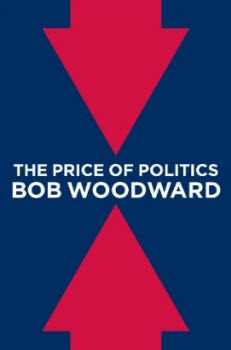
Listening to the conversation during the past year about the recent US Presidential elections, I had the distinct impression that many of my fellow citizens equate the belief that the person who holds the office of American president is “the most powerful (person) in the world” with a notion that s/he is omnipotent. It seems like magical thinking. That, somehow, an American president can just declare something ( wave a magic wand, so to speak) and it will become so. Of course, the world is more complicated than that.
Last April, I attended Bob Woodward’s lecture at Union College and was surprised that Woodward seemed to have a negative attitude toward President Obama. I was recently reminded of that experience while listening to Jon Meacham discuss his new book about Thomas Jefferson and the similarities to our current political situations. According to Meachan, Jefferson explained to his constituents (I’m paraphrasing here) that they should expect to be disappointed in some of his decisions because he had more information about situations than they did. The idealists who voted for Barack Obama in 2008 have been actively critical of some of the President’s actions and decisions during the past four years. In this book, Woodward seems to delight in pointing out contradictions between what Mr. Obama said and what he did. Again, I’m paraphrasing: “The president said: ‘I don’t want to lecture you” and then proceeded to lecture them.” The guy was a college professor. Is it a surprise that lecturing is his default mode of communication?
This book concerns the negotiations during 2011between the Obama administration and Congressional Republicans regarding the national budget. Woodward’s usual style is to interview as many participants and observers of conversations, both on and off the record, as possible in order to reconstruct those situations. The amount of distrust that Republican political leaders display during these interviews towards President Obama’s attempts to arrive at a bipartisan agreement is disconcerting. I understand that during negotiations each party positions itself towards the extremes so that they can eventually create a compromise for which each side can save face and claim victory. We don’t get any sense from this book that such was the case during these negotiations. Even when Obama is making clear the administration’s willingness to sacrifice for the sake of negotiation, there’s a sense that the Republican leaders believe there must be some evil intent.
An impression I take away from Woodward’s book is that Obama senior advisors Valerie Jarrett and Rahm Emmanuel contributed to this perceptions, perhaps without the president’s knowledge. Especially following the 2008 election, Woodward reports that both Jarrett and Emmanuel responded with arrogant “Tough luck. We won” attitudes to Republicans while President Obama was working to convey his willingness to create bipartisanship. GOP leaders presumed that Jarrett and Emmanuel were speaking for the president but, given the problems that Obama was having with the left-wing idealists of this Liberal constituency during the first two years of his presidency, that doesn’t seem to make a lot of sense.
There’s one fact I recall from this book which I find to be quite ironic. The Republican leadership’s emphasis was on cutting costs. Of course, their emphasis was on “entitlements” and they reacted very negatively toward any considerations about to cut the Pentagon’s budget. However, when the Department of Defense was asked how many people they employed, their response was “somewhere between one and nine million”. When pressed, they couldn’t be more specific. Republicans are the political party of business. I find it difficult to believe that any company CEO or president would react well if, when asked about the number of people their company employed, HR provided such a stunningly vague response. If the number of people employed by the Pentagon is “somewhere between 1 and 9 million”, it seems like there much be some fat which could be cut from its budget.
As I write this in late November 2012, President Obama has won re-election, Republicans are still resistant to returning to Clinton-era rates for those earning more than $250,000, and the “fiscal cliff” looms ahead of us. Let’s hope our leaders have all learned some valuable lessons from the experiences described in Woodward’s book.
 Posted in baby boomers, Baby Booomers, Branding, Elder care, entrepreneurs, marketing, Politics, Quality of life, research, small business, Social media, Uncategorized |
  Tags: Barack Obama, budget, Congress, Democrats, fiscal cliff, House of Representatives, Joe Biden, John Boehner, Mitch McConnell, Paul Ryan, politics, Rahm Emmanuel, Republicans, US Senate, USA, Woodward |
  No Comments »
The Passage of Power

In this book, Robert Caro picks up Lyndon Baines Johnson’s where he left off in Master of Senate. LBJ was nothing if not a complex person. Victim/bully/ champion of human rights/manipulative politician/devoted family man/adulterer.
Having grown up in predominantly Irish Catholic Southern New England during the 1960s, I was enamored with President Kennedy. Unofficially, he was sanctified by the majority of New Englanders that I knew. So, it’s disappointing to learn how the Kennedys and their colleagues treated Johnson. The Kennedys ridiculed and humiliated the man.
Bobby comes across as mean-spirited, self-centered, and a bit of a jerk. I hadn’t realized that Bobby had been a staffer for Senator Joe McCarthy. And there’s a scene where Bobby mocks then-Vice President Johnson at a dinner party by sticking pins in a Johnson voodoo doll. And Johnson, who was insecure in his VP role to begin with, feared that Bobby would thwart his ambitions to be the Democratic party’s presidential candidate in 1964 and 1968.
Early in this book, Caro reveals some behind the scenes details about the October 1962 Cuban Missile Crisis. Being a teenager who grew up in post-World War II America, I presumed that we had the situation under control and that everything would turn out alright. Apparently, we were a lot closer to nuclear war and annihilation than I thought we were. Fortunately, we lucked out.
The dominant theme for most of Caro’s book is the frustration that Lyndon Johnson felt during his time as JFK’s vice-president. Another VP, who was marginalized by FDR’s charisma, John Nance Garner described the office as “not worth a bucket of warm spit”. There’s little doubt that LBJ, who enjoyed using his power as Master of the Senate, agreed with that description of the vice-presidency.
The story in “The Passage Of Power” is far from boring. As the Washington Post’s reviewer writes: “In Caro’s account, LBJ comes across by turns as insecure, canny, bighearted, self-defeating, petty, brilliant, cruel and …domineering.” “Caro infuses his pages with suspense, pathos, bitter rivalry and historic import.”
The book contains interesting behind-the-scenes details about JFK’s selection of Johnson to be his running mate and about RFK’s efforts to thwart that decision. There’s also the story about how, after being denied the presidential candidacy and being offered the VP position, LBJ has staff members research how many presidents had died in office and, doing the math, calculates that the odds are in his favor that he might gain the presidency under those circumstances. Although Caro’s book cites authorities which make it clear that Johnson had no involvement in the JFK assassination, I have little doubt that the revelation of that particular anecdote is sure to fan the flames for conspiracy theorists.
For those of us who live through it, the story of the hours and days immediately following the events of November 22nd, 1963 are the most riveting part of this book. Being the personality type who becomes calmer and more focused during times of crisis, I could relate to Johnson’s reactions during those chaotic hours at the hospital immediately following the assassination. Witnesses marvel at how calm and in control he seemed. We also learn the reactions of Bobby and the Kennedy staff who despised Johnson and their unfavorable interpretations of his behavior. One gets the sense that, even when LBJ was trying his best to be sensitive the Kennedy group’s situation, he just couldn’t win. And, of course, the fact that the assassination occurred in LBJ’s beloved Texas didn’t help the situation.
In Bill Clinton’s review of Caro’s book, he marvels at LBJ’s political skill and talks about how, after Johnson assumed the presidency, he determined to get JFK’s Civil Rights bill passed by Congress despite the strong opposition of his fellow Southern Democrats. LBJ was advised to avoid squandering the political capital he’d gained as a result of the assassination on a cause that seemed hopeless. But Johnson’s response was: “Well, what the hell’s the presidency for?”
Clinton says that that’s the question that every president has to ask and to answer. To LBJ, during the final weeks of 1963, “presidency was for two things: passing a civil rights bill with teeth…and launching the War on Poverty.” It’s LBJ’s knowledge, skill and expertise in schmoozing, bullying, and cajoling Congress which gets the legislation passed by the House and the Senate. One gets the sense that, had John Kennedy lived, his administration wouldn’t have been able to achieve those results. It’s an interesting hypothesis and, of course, an answer which we’ll never know.
One thing that struck me while listening to this audio book is the comparison of how different things were back then when a president and congressional majority leader could use their powers to withhold perks and powerful positions in order to control Congress and get legislation passed. Today, when Tea Party candidates aren’t interested in becoming “professional politicians” and are determined to undermine the legislative system, those tactics can no longer work. So, I’m amused when I hear pundits criticizing our modern day president for not being able to control Congress under these circumstances. One only has to look at John Boehner’s frustration at trying to control his GOP colleagues in the House to understand the dilemmas of American political leadership in the 21st century.
“The Passage Of Power” ends as LBJ is deciding how the USA will proceed with its military efforts in Vietnam. His decisions about that war along with those of his successor, Richard Nixon were factors in creating the divisions between the Babyboomers and their parents’ generation and what Jimmy Carter described as our national “malaise” in the 1970s. As I finished this book, the thought struck me that the erosion of our attitude towards the presidency had its roots in Lyndon Johnson’s administration.
Posted in baby boomers, Baby Booomers, Politics, Quality of life, Uncategorized |
Tags: 1964, assassination, BabyBoomers, Bill Clinton, Caroline Kennedy, Civil Rights, Congress, Cuban Missile Crisis, DC, Democrats, Jackie Kennedy, JFK, Lady Byrd, LBJ, Lyndon Johnson, Martin Luther King Jr, poverty, President, RFK, Texas, USA, Washington |
No Comments »
Some Things You Should Know About Alzheimer’s
 Alzheimer’s disease is an affliction which we tend to think of as an old person’s disease.
But beginning this year, Baby Boomers will be turning 65 at the rate of 10,000 every day. Now, compared to 65 year olds of previous generations, the Boomer group tends to be much more active, agile and adventurous.
Nevertheless, it’s estimated that one out of every 8 Baby Boomers will develop Alzheimer’s disease and right now doctors don’t have any way to prevent it, cure it or slow down its progression. Today, someone in America develops Alzheimer’s every 69 seconds. By 2050, that rate is expected to increase to one every 33 seconds. Those are sobering stats especially considering the conversations that are going on in Washington, DC right now about the future of health care in America.

The Alzheimer’s Association has just released a study dealing with this issue. You can read and download “Generation Alzheimer’s: The Defining Disease of the Baby Boomers” by clicking on www.alz.org/boomers
Posted in baby boomers, Baby Booomers, Elder care, Politics, Quality of life, research, Uncategorized |
Tags: brain, Congress, Federal budget, health care, Medicaid, Medicare, Obamacare |
No Comments »
Words Have Consequences

Saturday’s assassination attempt of Arizona Representative Gabrielle Giffords which claimed six lives has some pointing an accusing finger at radio and cable TV hosts like Rush Limbaugh and Glenn Beck, claiming they had a role in the incident by provoking an unstable person. But INSIDE RADIO reports that the talkers are pushing back, calling it an unfair attack on conservative hosts.
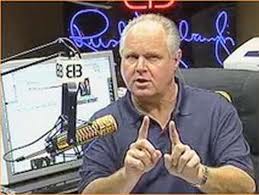
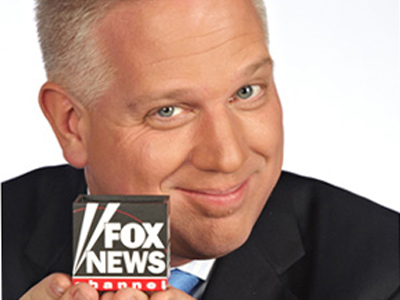

What do you think?
Update: 1/12/11
To alert people to this blog, I posted links on Twitter, Facebook and Linkedin. My experience is that my postings on Twitter never receive responses and are rarely retweeted but I view using it as a connection device to be a learning experience. On both Linkedin and Facebook, I don’t know if people actually link to this site to read the entire blog but they usually post their responses on those sites.
Not surprisingly, the responses tended to fall along party lines. Those folks whose politics tend toward the “progressive/liberal” camp seem to believe that the rhetoric heard on talk radio and cable TV in some way influenced the Tuscon tragedy. Those whose politics are more “conservative” seem to believe that liberals are trying to use the tragedy to impose restrictions on their First Amendment rights of free speech. Unfortunately, South Caroline Representative, James Clyburn (a Democrat) is fanning that particular flame by championing a return of the Fairness Doctrine. I’ve written previously about how anachronistic, outdated and absurd that notion is considering 21st Century communications technology.
In any case, the debate on this topic has certainly been lively. Although I have concerns about what sometimes seems like the irresponsible use of inflammatory rhetoric to manipulate audience reaction and ratings, my sense is that it wasn’t much of a factor in the case of the shootings in Arizona. I was especially impressed with these reactions from columnist David Brooks and The Daily Show’s Jon Stewart:

http://www.nytimes.com/2011/01/11/opinion/11brooks.html?_r=1&ref=davidbrooks
href=’http://www.thedailyshow.com’>The Daily Show With Jon Stewart
| Daily Show Full Episodes | Political Humor & Satire Blog</a> | The Daily Show on Facebook |
Polls show that 60% of Americans don’t believe that political rhetoric caused Jared Loughner’s assassination attempt on Rep. Giffords. Nevertheless, it seems to me that those who dismiss the impact of inflammatory rhetoric are making a mistake. Research shows that humans, even those of us who relieve that we are reasonable and rational, react emotionally and then rationalize to reinforce their beliefs.
In times of economic instability like we’ve been experiencing for the past decade in the United States, fear, insecurity and distrust become more prevalent as what Seth Godin likes to call our lizard brain takes control. Couple with that the ability that we have with the internet, various cable TV and social media to filter the information we receive. Now, we can choose to avoid all that inconvenient information which doesn’t reinforce our beliefs.
I can recall watching coverage of the 2008 Presidential campaign when a woman in John McCain’s audience started ranting about how Obama was evil and wanted to destroy America. The woman looked like an average grandmother but she was regurgitating this rhetoric and McCain looked stunned and embarrassed. He felt it necessary to reassure her that Barack Obama was a good person and an honorable man, not something that this woman or his supporters wanted to hear.
Another woman waiting in line to enter a McCain/Palin rally told an interviewer that Obama was a socialist who wanted to destroy the country and that he wasn’t an American citizen. She was very matter-of-fact as if these were proven facts rather than unsubstantiated rumors spread through the internet.

Albany Times Union editor, Rex Smith makes some cogent observations in this recent editorial:
http://www.timesunion.com/opinion/article/Words-the-first-step-to-civility-959442.php
Those of us who’ve worked professionally in media know how easy it is to manipulate an audience. It can be a source of childish delight to watch your audience jump through hoops at your whim but it’s also important to take responsibility for your actions and for the results of those actions whether or not they are intended.
Words have consequences.
Posted in Baby Booomers, Online Media, Politics, Quality of life, Social media, Uncategorized |
Tags: Arizona, Congress, Daily Show, David Brooks, FACEBOOK, Fox News, Gabrielle Giffords, Glenn Beck, Jared Loughner, Jon Stewart, Linkedin, Rex Smith, Rush Limbaugh, Sarah Palin, Twitter |
No Comments »
Resolving The Radio/ RIAA Impasse

In his blog today, Jerry Del Colliano offers his solution to the radio/RIAA Performance Rights Act standoff:
“1.Agree upon a very, very small fee for radio stations and guarantee the rate for the next seven years. Of course, you’ll never get the seven years but start low and give an increase — a small one — at one or two points along the way.
2. Local, independent operators (mom and pops), the real heart of local radio, should be totally exempt from any fees. I believe this can be negotiated in. Local operators are helping their communities and local and regional economies, they deserve a break. This is the strongest argument for local radio — where local radio actually exists — and this is the workaround.
3. Radio groups operating under 30 total stations should get an additional break no matter what market they are in because 30 stations constitutes a small group by today’s consolidated radio numbers. The number 30 can be 40, or 50 — it’s negotiable.
4. Large consolidators like Clear Channel, Citadel, Cumulus and others should pay the highest fee — but even that should be comparably low. Remember, the music industry just wants to get rid of the performance exemption so it can raise these percentages as soon as possible. Their compromise might have to be accepting pennies on the dollar for the first seven years.
5. This is a must and only a fool would knowingly agree to pay additional music royalty taxes for terrestrial radio without it. Radio stations would be exempt from paying these charges for their podcasting or online streaming of programming that is separate and apart from their terrestrial radio signal. The future is mobile Internet and as a result, this is the concession that radio operators need to get a leg up on the new frontier. The radio industry can argue, okay — you get some music royalties for terrestrial radio under certain circumstances but you give us music in this new space for free while we take the next seven years to build the podcasting and mobile and streaming businesses. It will be worth even more to you when we use our know-how to build these platforms and you can get a royalty on them as well later.”
You can read Jerry’s full blog at http://insidemusicmedia.blogspot.com/2010/04/radio-royalty-solution.html
Posted in Online Media, Politics, Social media |
Tags: Congress, Jerry Del Colliano, musicFIRST, Performance Rights Act, radio |
1 Comment »
The Fairness Doctrine
As a political moderate and independent, I have concerns that a Democratic majority will let their biases override good sense and will create rules and laws which restrict freedom of speech on broadcast radio outlets. They seem to have some misguided notion that corporate edicts dictate the content of talk radio when, in fact, conservative talk radio replaced moderate/liberal talk radio because conservatives tended to be more passionate about and loyal to their favorite talk shows than did moderates and liberals.
Those in Congress who advocate the return of the Fairness Doctrine don’t seem to understand that when radio was deregulated during the Reagan era and there was an explosion of new frequencies on the dial each station’s programming had to become more focused and predictable in order to survive. Power was transferred from the programmers to the listeners who were able to get what they wanted when they wanted it and knew where to find it on their radio dials. Now, with streaming, podcasts, Twitter and soon WiFi distribution of Internet radio, there are abundant opportunities to hear different opinions for those who want to hear them.
Obviously, there is a liberal audience available and NPR stations whose programming tends to be more politically progressive than commercial radio boast large and loyal audiences. In fact, the success of public radio with listeners with moderate and/or liberal political views might be a reason why commercial radio stations have been largely unsuccessful in cultivating a significant audience base of those listeners.
Posted in Online Media, Politics |
Tags: Congress, conservatives, Fairness Doctrine, liberal media |
No Comments »