

Archive for the ‘Quality of life’ Category
Confessions of a Baby Boomer
 February 18th, 2015 |
  Author:
 I’ve just “celebrated” my birthday. To be honest, I dreaded more than I celebrated this one.
Of course, I’m grateful that I’m physically healthy and mentally alert at this stage of my life. From my perspective, I’m still a relatively young guy with a significant amount of potential ahead of me. Unfortunately, our society doesn’t see it that way.
That’s one reason why I started the Ambitious Energized Alpha Boomer group on Linkedin. I figure that there have to be more Baby Boomers like me who aren’t ready to submit to being what euphemistically used to be called being “put out to pasture” simply because we’ve passed the arbitrarily selected retirement age of 65.
I do recall that my Victorian Era grandparents acted “old” by the time that they reached their mid-60s. But my Silent Generation dad wasn’t ready to retire when he turned 65.
I recently read “Being Mortal” and that book did pull me up short in terms of the physical and mental limitations which I should expect to arise during my next 20 to 25 years. However, I’m still a believer that a positive but realistic attitude and determination to improve can contribute to one’s longevity and quality of life.
So, my plan is to continue to strive for the opportunity to improve in all aspects of my life and to thwart those societal forces which are determined to limit me. A “Today Is the First Day of the Rest of Your Life” approach.
How about you?
 Posted in baby boomers, Baby Booomers, History, Politics, Quality of life, Uncategorized |
  Tags: Being Mortal, birthdays, mortality |
  3 Comments »
Trustworthy, Loyal, Helpful, Friendly
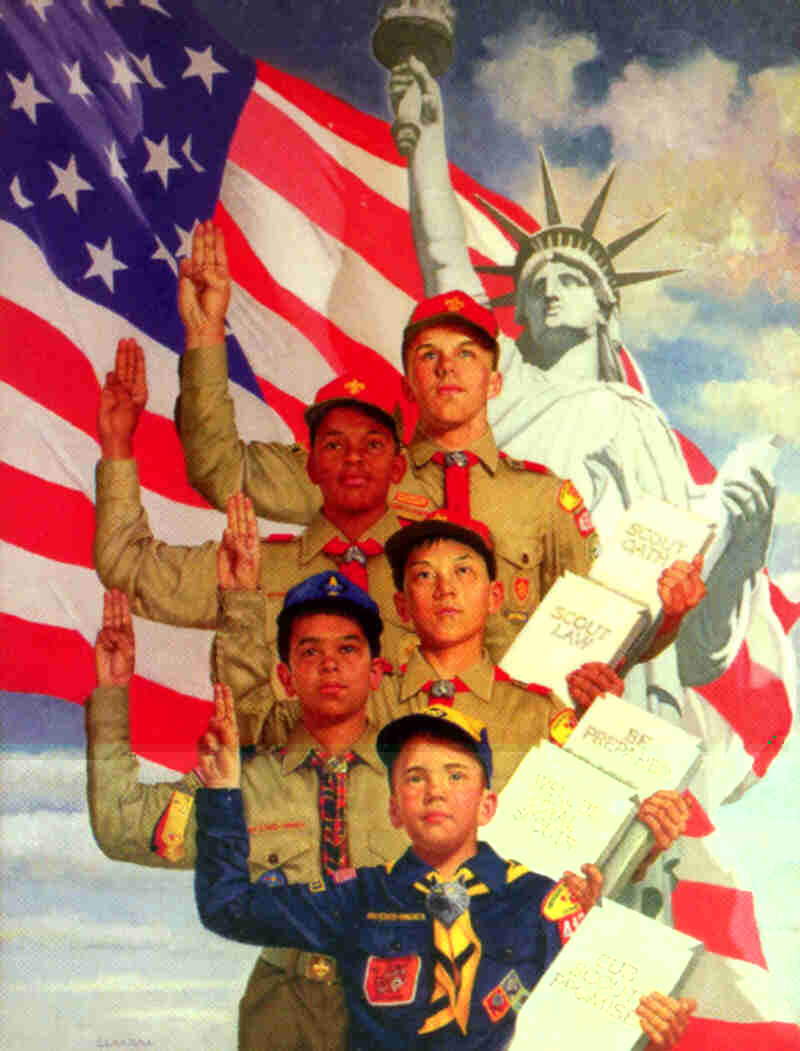
Boy Scouts of America was founded on February 8, 1910.
The BSA is no longer looked upon favorably by some segments of American society. However, I’m grateful that my boyhood experience as a Cub Scout and Boy Scout taught me to Be Prepared. And, even at this stage of my life, I’m still striving to be:
Trustworthy
Loyal
Helpful
Friendly
Courteous
Kind
Obedient
Cheerful
Thrifty
Brave
Clean
Reverent
Posted in baby boomers, Baby Booomers, Branding, History, marketing, Politics, Quality of life, Safety, Teenagers, Uncategorized |
Tags: Boys Scouts, BSA |
No Comments »
Marketing Doesn’t Have to Be Evil

A recent Scott Adams cartoon shows a marketing team member complaining that engineers are paid more than marketers. Dilbert’s responds that the pay disparity might be explained “Because engineers designed and built every important part of modern civilization and all (marketers) did was misrepresent it”.
Unfortunately, the idea that marketing is synonymous with lying and that members of the marketing profession rank somewhere near or below used car salesmen, lawyers and congressmen is quite prevalent. And, of course, the TV series, “Mad Men” didn’t help.
It doesn’t have to be that way.
My sense is that part of the problem comes from the notion that marketing is a sales function. From my perspective, marketing should be the next logical step after product development. Its function is:
1) To make potential customers aware of the product/service’s existence.
2) To make potential customers aware of the product/service’s merits
3) To position the product/service in the potential customer’s mind in a positive light relative to the competition.
Problems arise when marketers become disingenuous and create blatantly misleading messages about the product/service. Today’s consumers have sophisticated BS detectors So even if you fool them once it’s less likely that they’ll be fooled a second time. Exaggerating about a product’s/service’s benefits or, worse, downright lying about them simply exacerbates the problem.
A recent article in the Johns Hopkins University Carey Business School’s magazine, ONE discusses how companies have begun using neuroscience technologies such as fMRI and PET to observe how the brain functions during the decision-making process. The best way to utilize this data is not to employ it as a tool to manipulate people’s purchase decisions but instead to use the information to make a brand’s marketing more selective and to increase a campaign’s effectiveness by being better targeted.
I don’t mean to be Pollyanna-ish about this but, in the end, the marketing profession will be much better served if we can forego the temptation to be deceitful and instead make an honest attempt to put the product or service we represent in the best light possible without resorting to exaggeration or deception and let the chips fall where they may.
Posted in Branding, marketing, Online Media, Quality of life, Radio, small business, Social media, video |
Tags: advertising, Carey Business School, cartoons, decision-making, Dilbert, fMRI, Johns Hopkins, marketing, neuroscience, PET, sales |
No Comments »
I’m Not Dead Yet!

Recently, People Magazine’s website posted the actor, Kirk Douglas’ obituary. Unfortunately for People (but fortunately for Kirk Douglas), he’s still alive and kicking at 98. It brings to mind that scene from Monty Python’s “Holy Grail”.
When we get to a certain age, we start paying more attention to obituaries to learn if someone we know or cared about has died. Secretly, some of us also compare the ages of those who’ve died with our own.
And, let’s face it, reading about death in the obituaries can be a sad and depressing experience.
NPR Weekend Edition Saturday’ host Scott Simon offers an interesting suggestion:
“… an obituary strives to have the perspective of a full life. Failures and mistakes which once loomed huge can finally be seen as small bumps on a long road.
Maybe it would be a good exercise — even a gift, in the holiday season — to help write a brief obituary for someone you love while they are still vibrant, alive, and able to appreciate it. You can remember a grandmother, who may seem a little halting and crotchety now, as she was when she was young and light-hearted. You can ask a father who can seem exasperated about being an authority figure now to remember the years when he was young, unruly, and even a little sassy. Seeing your life stretched out may make you see disappointments and defeats as pointers, not missteps, along that long road”

What do you think?
Posted in baby boomers, Baby Booomers, History, Online Media, Quality of life, Uncategorized |
Tags: appreciation, Chanukkah, Christmas, gift, Hanukkah, holidays, Kirk Douglas, Monty Python, NPR, obituaries, People Magazine, Scott Simon |
No Comments »
An Election Day Parable: Remember to Vote
While walking down the street one day a Corrupt Senator was tragically hit by a car and died.
His soul arrived in heaven and was met by St. Peter at the entrance.
“Welcome to heaven,” greeted St. Peter. “Before you settle in, it seems there is a problem. We seldom see a high official around these parts, you see, so we’re not sure what to do with you.”
“No problem, just let me in,” replied the Senator.
“Well, I’d like to, but I have orders from the higher ups. What we’ll do is have you spend one day in hell and one in heaven. Then you can choose where to spend eternity.”
“Really?, I’ve made up my mind. I want to be in heaven,” said the Senator.
“I’m sorry, but we have our rules.”
And with that, St. Peter escorted him to the elevator and he goes down, down, down to hell.
The doors opened and he found himself in the middle of a green golf course. In the distance was a clubhouse and standing in front of it were all his friends and other politicians who had worked with him.
Everyone was very happy and in evening dress. They ran to greet him, shake his hand, and reminisce about the good times they had while getting rich at the expense of the people. They played a friendly game of golf and then dined on lobster, caviar and the finest champagne.
Also present was the devil, who really was a very friendly guy who was having a good time dancing and telling jokes.
They were all having such a good time that before the Senator realized it, it was time to go.
Everyone gave him a hearty farewell and waved while the elevator rose.
The elevator ascended up, up, up and the door reopened in heaven where St. Peter awaited him, “Now it’s time to visit heaven…
So, 24 hours passed with the Senator joining a group of contented souls moving from cloud to cloud, playing the harp and singing. They had a good time and, before he realized it, the 24 hours had gone by and St. Peter returned.
“Well, then, you’ve spent a day in hell and another in heaven. Now choose your eternity.”
The Senator reflected for a minute, then he answered: “Well, I would never have said it before, I mean heaven has been delightful, but I think I would be better off in hell.”
So St. Peter escorted him to the elevator and the Senator descended down, down, down to hell…
When he arrived, the doors of the elevator opened and he was in the middle of a barren land covered with waste and garbage. He saw all his friends, dressed in rags, picking up the trash and putting it in black bags as more trash fell from above
The devil approached and put his arm around his shoulders.
“I don’t understand,” stammered the Senator. “Yesterday I was here and there was a golf course and clubhouse, and we ate lobster and caviar, drank champagne, and danced and had a great time. Now there’s just a wasteland full of garbage and my friends look miserable. What happened?”
The devil smiled and replied :
“Yesterday we were campaigning, Today, you voted..”
Vote wisely
Posted in baby boomers, Baby Booomers, Branding, marketing, politicians, Politics, Quality of life, Uncategorized |
No Comments »
Halloween Trick-Or-Treat Tips

A few reminders which you might find helpful as your kids get prepare for some Halloween fun:
*Feed them a healthy meal before they leave the house.
*Make sure costumes are non-flammable.
*An adult should accompany elementary school-aged kids. Older kids should trick-or-treat in pairs or groups and carry a working cell phone.
*Set a curfew. Stick to it!
*Reminds kids that its hard for drivers to see them even when they can see an oncoming car.
*In neighborhoods where cars are parked on the street, remind kids to not enter the street between two parked cars.
*Trick-or-treaters should carry a flashlight, glow stick, or wear reflector tape on their costume.
*Kids should only approach homes that have lights on or a lighted display.
*For ALL trick-or-treaters, they shouldn’t eat anything until it’s been inspected by a parent.
Posted in Children, marketing, Parenting, Quality of life, Safety, Teenagers, Uncategorized |
Tags: costumes, Halloween, safety, trick-or-treat |
No Comments »
World Series 2014: Confessions of a Fair Weather Fan
Postseason=The beginning of the Major League Baseball season for me.


Don’t get me wrong. I like baseball. I just don’t care about the MLB until post-season. The same is true for the NFL. It wasn’t always this way.
I was raised in a small New England village with a great baseball field about 100 yards downhill from our back porch. Between the ages of 5 and 13 , during the daylight hours when I wasn’t in school, doing homework or participating in organized sports at another venue, that’s where you’d probably find me with the other guys from our neighborhood playing baseball in Spring and Summer or touch football in the Fall.
Since I was a New Englander, I grew up a Red Sox fan. The Yankees represented the Evil Empire. New England didn’t have an NFL team in those days and the Jets didn’t exist, so the New York Giants was my default team of choice.
In later years, I lived in Pittsburgh where I became a Pirates and Steelers fan.
But now I’ve lived more than half of my life as a resident of New York state and, although during some of those years I’ve been a half-hearted Yankees fan, I’m not emotionally committed to any of the New York teams. I may, at times, like certain MLB and NFL teams more than others but I’m not passionate about any of them.
I’m a fair weather fan.
Which is why baseball season has just started for me. Now that “the wheat is separated from the chaff”, “the cream has risen to the top”, or whichever metaphor you choose to use to describe the process which has brought the Royals and the Giants to the World Series, I’m now getting interested.
I’m looking forward to a World Series of close games, late nights, emotional ups and downs, and watching some amazingly gifted athletes and managers perform under pressure.
I find watching them to be inspiring and educational….even if I’m just a lowly fair weather fan.
SanFrancisco.Giants.MLB.com/ KansasCity.Royals.MLB.com/
Posted in Baby Booomers, marketing, Quality of life, Sports, Uncategorized |
Tags: baseball, fans, Kansas City Royals, MLB, San Francisco Giants, sports, World Series |
No Comments »
Memories of Dad 2014
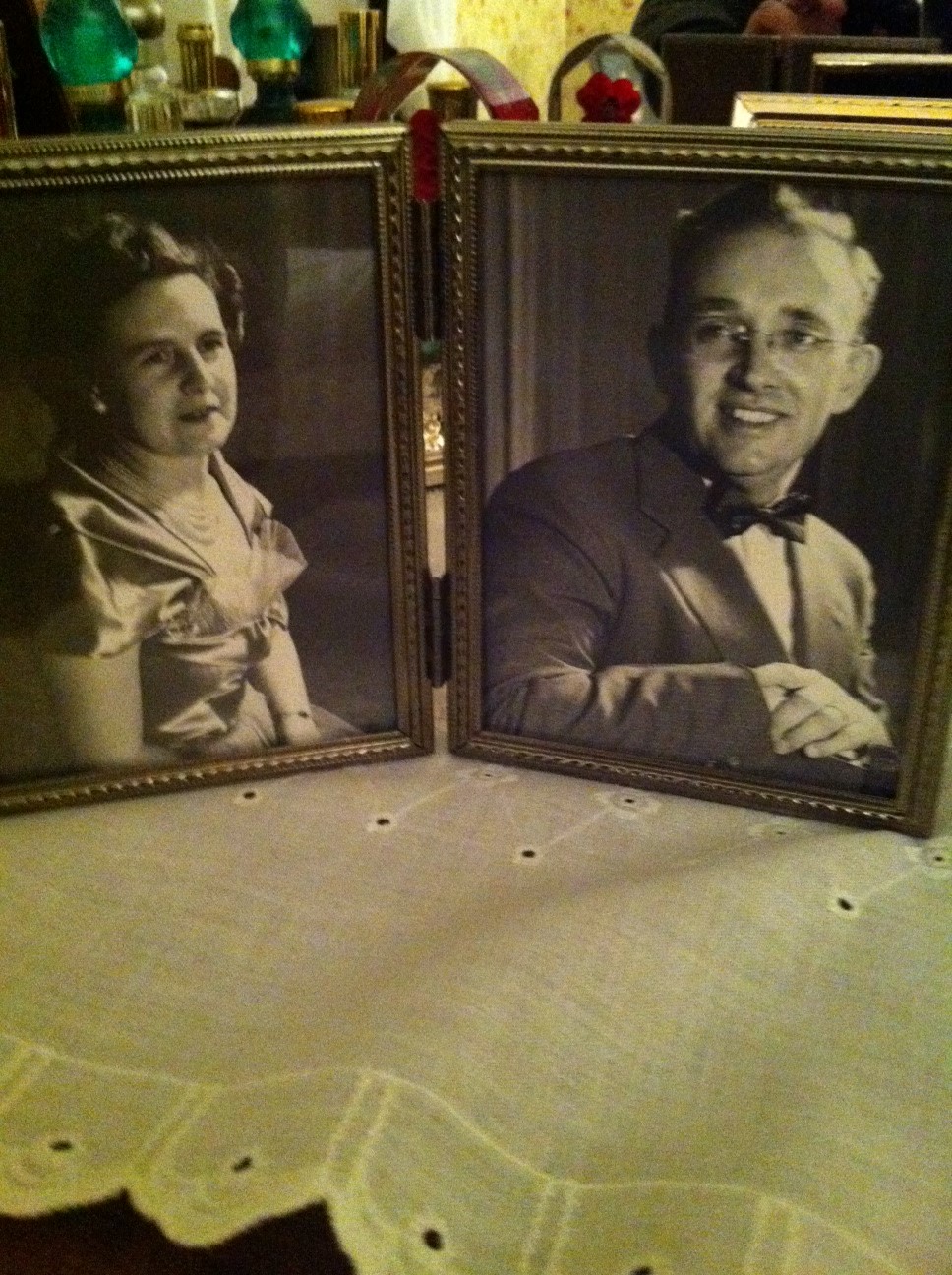
My dad, Earl Brindle died in December, 2006.
Over the past few years, I find myself having conversations with my father especially during my morning walks. I’ll be thinking about some problem or concern and, suddenly, I’ll be asking Dad what he thinks. He doesn’t talk back but, in some way, I do feel his presence. He’s also shown up as a participant in my dreams. I’ll wake up and have to remind myself that Dad’s no longer “here”. I’m not sure what that means but were I to visit a psychoanalyst I’m sure that they’d have a field day with that information.
It’s odd because I didn’t have that many conversations with my father when he was alive.
As I’ve grown older, I’ve started to notice similarities between myself and my father. Our body types are more alike than I’d once thought. I like learning new things and sharing information with others that might help them to increase their understanding or improve their life. Although perceived by some to be an outgoing socializer, my nature is to be somewhat of a loner. At home, I’m not handy. Neither was he. But I know it and hire experts. He tried to do it himself. Then we brought in the experts!
My mother had been mythologizing Dad for my brother, Alan and me ever since we were kids. In Mom’s eyes, he was perfect in every way. And my father was a terrific role model: self-educated, intellectually curious, ethical, compassionate, generous, friendly, self-deprecating, great sense of humor, civic-minded, concerned citizen, loyal & devoted husband, interested & involved parent, honest, reliable, trustworthy, helpful, courteous, kind, cheerful, thrifty, brave, clean, and reverent. A solid, upstanding role model. As the first born son of a role model like this, it’s not a total surprise to me why I’ve had a problem with authority figures all my life!
Dad grew up during The Great Depression. He would have easily done well in college but his parents were poor and couldn’t afford to send him. So, he did his best, served his country during World War II, worked hard, provided for his family, weathered adversity, and lived a productive, honorable life. We Baby Boomers may feel like we’ve been having a tough time during these past five years but my father and most others of his generation lived through and survived during much tougher times. Somehow, they made it through and managed to thrive. Rather than whining and bemoaning our losses, we need to learn from their example, do what’s best for our country and humanity, and get on with our lives.
Through his actions and his words, Earl N. Brindle taught me about being a generous and compassionate friend and neighbor, about being a trustworthy and equal partner in marriage, about being a good parent and about being focused on getting the job done right. I’m still his work in progress.
My father is one of the reasons I ended up in Saratoga Springs. Dad loved to ride horses, a skill he picked up in Wyoming during his stint with the Army Air Forces, and enjoyed watching them race. Along with such sporting events as the Saturday night boxing matches, NY Giants football, and Red Sox baseball, we would always watch the Triple Crown races together. When I moved to Saratoga and took him to our legendary race course in August to watch the morning workouts, he was in heaven. Along with being able to give him a granddaughter who he adored, I’m glad that I was able to give him those experiences at Saratoga Race Course.
I’m grateful for the time that my dad spent with me at the baseball field trying (unsuccessfully) to help me become a better player, trying to teach me how to fish (again, unsuccessfully), and risking his life and his sanity as he endeavored to teach his 16 year old eldest son how to drive.
Thanks, Dad, for setting such a great example for how to be a good parent. Hope my kids feel the same about me one day.
Posted in baby boomers, Baby Booomers, Online Media, Quality of life |
Tags: Earl Brindle, Fathers Day, parents, Saratoga Springs |
2 Comments »
Boomers Reimagined
“In the mid-1880s,…growth of colossal corporations in the aftermath of the Civil War had produced immense, consolidated wealth for business owners, but the lives of the working people…had become increasingly difficult.” In her book, The Bully Pulpit, Doris Kearns Goodwin quotes one of Teddy Roosevelt’s political rivals as observing: “We plow new fields, …open new mines,…found new cities…we add knowledge and utilize invention after invention. (Yet) it becomes no easier for the masses of our people to make a living. On the contrary, it is becoming harder.”
Sound familiar?
Although America’s unemployment rate has been dropping, long term unemployment remains a major issue. It’s estimated that over a million Baby Boomers are members of the long term unemployed cohort.
More than 15% percent of the approximately thirty-six million Baby Boomers born in the U.S. between 1946 and 1954 are expected to live active, healthy lives into their 90s. Since retirement savings for many of those Boomers were severely diminished during the recent financial crisis, many of them will need to continue working at jobs which are both psychically and financially rewarding well past the traditional 65 year old retirement age. Meanwhile, American businesses including the legal and medical professions are reducing their labor forces through the use of automation and robotics.
To remain a successful capitalist economy, America needs consumers for the goods and services it produces. Although many of American industries’ customers may come from outside of the United States, it will also be necessary for Americans to consume local goods and services. To do so, they will require sufficient incomes.
As columnist Tom Friedman points out, the US needs to rethink its social contracts because labor is important to a person’s identity and dignity as well as to societal stability.
For the country’s future well-being, political and business leaders need to focus not only on helping millennials who are entering the workforce but also on redeveloping the American economy to keep healthy Baby Boomers engaged in jobs which are both psychically and financially rewarding. The challenge will be to create opportunities to unite the natural resources of Boomer experience and expertise with the 21st century skill sets of Millennials.
Suggestions?
Confessions of a Fair Weather Football Fan

The NFL season has just gotten started for me.
Don’t get me wrong. I like football. I just don’t care about the NFL until post-season. The same is true for baseball. It wasn’t always this way.
I was raised in a small New England village with a great baseball field about 100 yards downhill from our back porch. Between the ages of 5 and 13 , during the daylight hours when I wasn’t in school, doing homework or participating in organized sports at another venue, that’s where you’d probably find me with the other guys from our neighborhood playing baseball in Spring and Summer or touch football in the Fall.
When I was growing up, New England didn’t have an NFL team and the Jets didn’t exist, so the New York Giants was my default team of choice.
In later years, I lived in Pittsburgh where I became a Steelers fan. But now, although, I’ve lived more than half of my life as a resident of New York State, I’m not emotionally committed to the Giants or the Jets. I may, at times, like certain NFL teams more than others but I’m not passionate about any of them. Although, during the Broncos/ Patriots game I was definitely rooting for New England. But, since the Patriots lost, I have no Superbowl preference.
I’m a fair weather fan.
Which is why the NFL season started for me earlier this month. Now that “the wheat is separated from the chaff”, “the cream has risen to the top”, or whichever metaphor you choose to use to describe the process which brought the contending teams to the playoffs, I’ve gotten interested.
So, I’m looking forward to the SuperBowl’s emotional ups & downs, and to watching some amazingly gifted athletes and their coaches perform under pressure. The commercials will be fun, too.
I’ll find watching them to be inspiring and educational….even if I’m just a lowly fair weather fan.
Posted in Baby Booomers, Branding, marketing, Online Media, Quality of life, Social media, Uncategorized |
Tags: Broncos, Denver, football, Giants, Jets, New England, New York, NFL, Patriots, Patton Manning, Seahawks, Seattle, sports, Steelers, Superbowl |
No Comments »